

The Org Chart is Queen
As businesses grow, organizations develop informal ways of sharing information that are often unplanned, organic, and subject to change.
The Org Chart is Queen Read More »
As businesses grow, organizations develop informal ways of sharing information that are often unplanned, organic, and subject to change.
The Org Chart is Queen Read More »
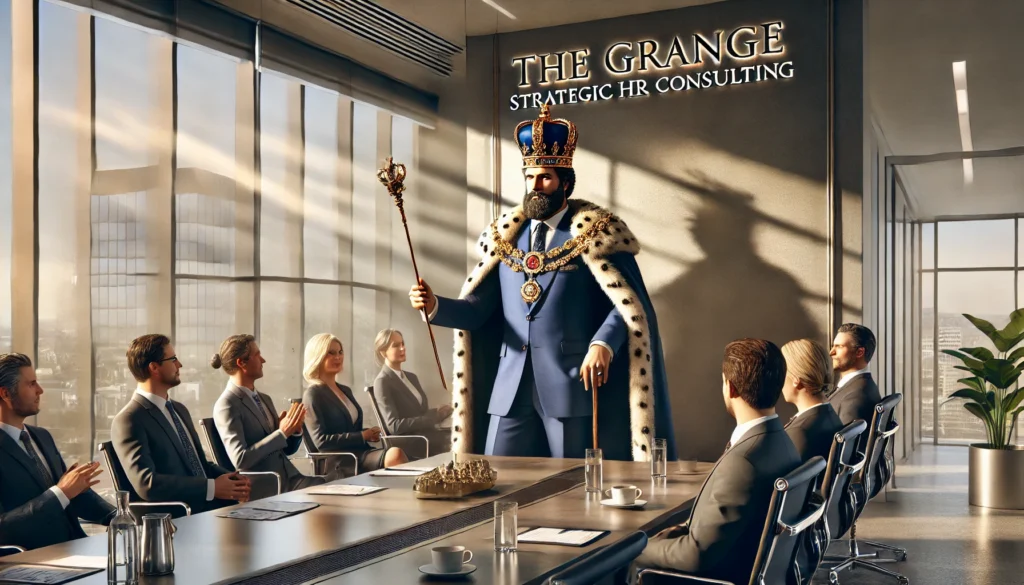
The importance of culture seems to be axiomatic lately. I hear how important culture is everywhere from HR conferences to broadcasts of NFL games. Everybody seems to understand the idea that culture is important. Is it really? First, let’s define what is meant by culture. Culture is the sum of all interactions within an organization. OK… that’s easy to say, but what does that look like in practice? If most communication with employees is managers giving dictates and not asking for input from front line employees, it means that part of the company culture is a top down command structure where employees don’t have input into decisions. Think of it as the graphic showing your volume on your phone. It’s not all on or all off, it’s usually somewhere in between. How much influence that one particular aspect of your company culture has on the outcome of your business is relative to the other aspects of your culture. Then let’s define “good company culture”. This gets a little more difficult because not all organizations play in the same arena. For example, a “good” culture working at Minky Couture is probably very different from a “good” culture at the Chicago Bears. Therefore, a “good company culture” has to be defined as the culture that produces the best results for the organization over time. It’s important to note however, as Jim Collins points out in his landmark book Good to Great, that cultures can sometimes produce incredible results over a period of time, but not be able to sustain them. For the purpose of this article, we’ll note that a “good culture” is one that facilitates the successful achievement of the company’s objectives over a long period of time. Of course, all of this points out the nuanced nature of culture and how difficult it is to quickly assess it until you’ve lived it. It is possible, however, after some study, to find commonalities between successful cultures that seem generalized across industry and time. If that is done, we begin to see how important culture can be. Examples of this abound. According to a research study published by the Society for Human Resource Management (SHRM) in December of 2024, 57% of employees who rated their culture as poor said that “they are actively or soon will be looking for another job.” While the study didn’t mention who those employees were, I think we can reasonably assume they are the employees who are most likely to get another job. In other words, they are better performers over all. SHRM also noted that more than a quarter of employees who found their company culture lacking, said they were “burned out.” In the light of this, an argument could be made that Jim Collin’s work, more than anything, underlined this one fact: all success is downwind of culture. Employees who are “engaged” are more productive, more efficient, and solve problems on their own instead of taking it to leadership for a solution. They are, in short, focused on their jobs and giving it their full attention with the goal of improving it. They look to build the organization and take personal satisfaction from doing so. As Sunnie Giles notes in her book, The New Science of Radical Innovation, this is a fundamental component of companies that radically transform their industries. It can’t be done without engaged human capital revolutionizing processes to produce a better result. If all of this is true, the natural response from managers should be to make culture their highest priority. Do nothing to damage it, do anything to enhance it, and then nurture its growth. In short, culture is king.

Not sure if you need HR yet? You do. As a matter of fact, you’re probably late. Do you have HR on your payroll but aren’t seeing anything from it but red tape and expenses? Maybe you’re not sure what HR contributes to your bottom line other than a reduction of liability (compliance). Human Resources is the art of management. Your company’s future is only as bright as the people working for it. Does the future of your company, then, only rest on how good you are at identifying good employees in the interview process or is there more to do? If you buy a machine that is rated to make 100 widgets an hour, do you accept it when you only get 80 an hour? Do you get rid of the machine and buy a new one? Of course not, you have too much invested in the purchase of the machine to simply toss all of that aside and get a new one. By my calculation the cost of hiring an employee is, at a minimum, half of the annual salary associated with the position you’re filling. Then why is that the approach that so many businesses take when they hire people? It’s because they don’t understand the power of engaged employees who actively solve problems, find new ways to accomplish company goals, and grow more efficient over time. That is the role of Human Resources. You can’t change the oil, reset the gears, or reprogram employees like you can machines, but you can develop their talents and increase their productivity over time. Human Resource professionals in your organization are there to help managers do that. All of the areas that HR manages such as benefits, perks, policies, and pay are only tools that HR uses to ensure your employees become more productive over time. I’m famous for starting speeches with the phrase “most HR people suck”. If your HR team isn’t actively improving the efficiency of your human capital, you need to reexamine HR’s role in your company. …And that’s why The Grange is here.
Why Do HR Correctly? Read More »